


Table of Contents
- Why Fabric Choice Matters for Eczema-Prone Skin
- The 7 Best Natural Fabrics for Sensitive Skin
- Fabrics to Avoid for Sensitive Skin
- Organic Cotton Benefits for Skin: Why It Stands Out
- How to Identify Toxic Dyes in Clothing
- How to Care for Natural Fibers to Minimize Irritation
- Which Fabric Should You Choose?
- Frequently Asked Questions
Last Updated: September 7, 2026
Why Fabric Choice Matters for Eczema-Prone Skin
Your skin is your largest organ, and everything you put against it gets absorbed. For those with eczema-prone skin or contact dermatitis, the wrong fabric can trigger a flare-up that takes days to calm. Natural fibers for sensitive skin matter because synthetics trap heat and moisture, creating an environment where irritation and bacterial growth thrive.
The core issue isn't just the fiber itself but the chemical residues left behind from processing. Conventional cotton, for instance, is often treated with formaldehyde resins and synthetic dyes that can act as textile irritants.
Fabric weight and weave density matter just as much as the fiber type. A loosely woven organic cotton tee breathes better than a tight-knit synthetic blend, regardless of brand claims.
The 7 Best Natural Fabrics for Sensitive Skin
The best natural fabrics for sensitive skin are organic cotton, TENCEL lyocell, silk, linen, bamboo viscose, ultra-fine merino wool, and modal. Each offers distinct benefits, from friction reduction to thermal regulation, but they all allow your skin to breathe and avoid the chemical load found in synthetics.
Weave density and yarn twist matter as much as the fiber itself. A tightly woven poplin cotton can chafe more than a loosely knit bamboo jersey, even if both are certified organic. Prioritize fabrics with a smooth, low-friction surface and an open structure that allows air to move.
Organic Cotton: The Gentle All-Rounder
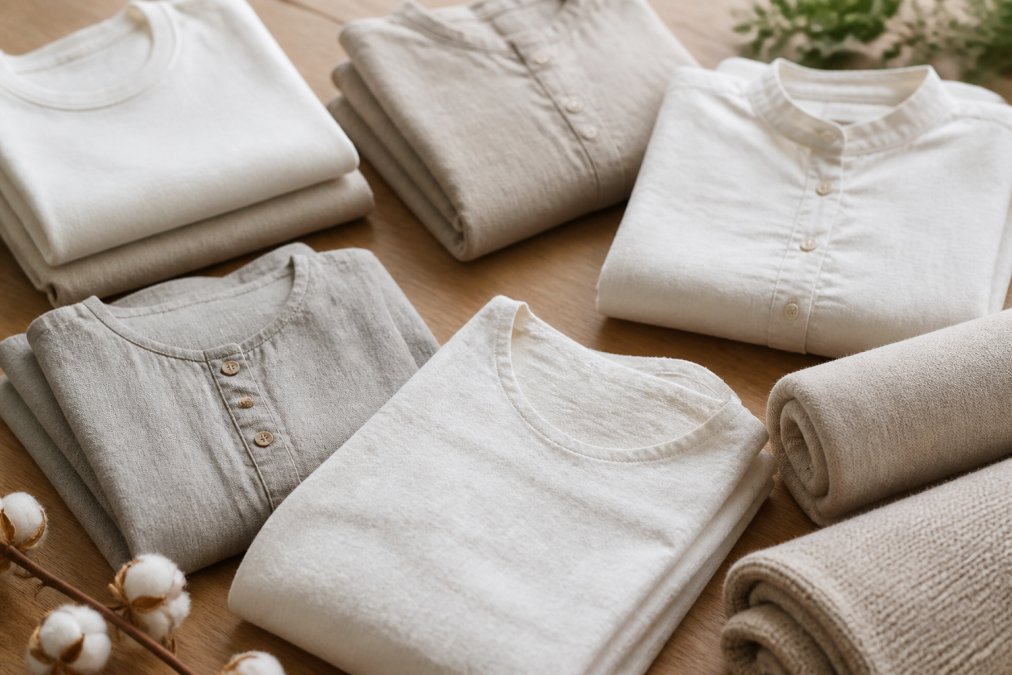
Organic cotton is the most reliable choice for daily wear. It is hypoallergenic, highly breathable, and absorbs moisture effectively, which prevents the dampness that worsens eczema. Unlike conventional cotton, it is grown without pesticides and processed without harsh chemical residues, making it a true natural fabric for sensitive skin.
The key differentiator is fiber length and weave structure. Long-staple organic cotton (such as Supima or Egyptian varieties) produces a smoother yarn with fewer protruding fibrils, meaning less micro-friction against a compromised skin barrier. Look for a jersey knit for t-shirts and underwear and a loose poplin or lawn weave for button-downs and bedding.
The main drawback is drying time; organic cotton holds water longer than synthetic blends. If you sweat heavily, you may need to change layers midday.
TENCEL Lyocell: Smooth and Cooling
TENCEL Lyocell is a cellulose-based fiber derived from sustainably sourced wood pulp. Its exceptionally smooth surface reduces friction against reactive skin, and its natural moisture management keeps you cool in warm weather. Many customers with heat-triggered sensitivities find TENCEL outperforms cotton in summer.
TENCEL uses a closed-loop production process that recovers the solvent rather than releasing it into wastewater. The resulting fiber has a round, uniform cross-section that lies flat against the skin, unlike cotton's twisted ribbon shape, which can create micro-abrasions over hours of wear.
Choose a single-jersey or interlock knit for sleepwear. Avoid brushed or fleece-backed TENCEL, as the raised surface traps dead skin cells and increases rubbing. The cost is higher than standard cotton, but the durability and comfort justify the premium.
Silk: The Low-Friction Soother
Silk is a natural protein fiber with an extremely low friction coefficient, making it the best choice for severe inflammation or contact dermatitis. Its temperature-regulating properties keep you comfortable in both warm and cool conditions.
Silk's continuous filament (a single unbroken strand from the cocoon) creates a surface with no short fiber ends to poke or catch. This is why silk pillowcases are recommended for facial eczema and acne, the reduced shear force on the skin overnight prevents mechanical irritation. For garments, choose charmeuse or habotai weaves for base layers.
Silk requires delicate care, typically hand washing with a gentle, dye-free detergent. For a pillowcase to protect your face overnight or a base layer for highly reactive skin, pure silk is unmatched.
Linen: Durable and Breathable
Linen comes from the flax plant and offers naturally anti-bacterial properties that benefit sensitive skin. It is exceptionally breathable, making it ideal for hot climates where sweat and heat trigger flare-ups.
The breathability comes from the hollow structure of flax fibers, which wick moisture away from the skin and allow air to circulate through the yarn itself. A loose, open weave maximizes airflow, while a tight, high-thread-count linen can feel stiff and abrasive on day one. Wash linen three to four times before wearing it next to sensitive skin.
Linen wrinkles easily but softens significantly with each wash, so a slightly stiff new garment becomes comfortable within a few wears.
Bamboo Viscose: Soft for Sleepwear
Bamboo viscose is a buttery-soft fabric with excellent thermal regulation, making it a favorite for sleepwear and loungewear. It wicks moisture naturally and drapes well, reducing pressure points on irritated skin.
The softness is a function of the viscose process, which dissolves bamboo pulp and regenerates it into a fine filament. The resulting fiber is rounder and smoother than cotton, with a lower modulus of elasticity, it stretches and recovers gently rather than snapping back against the skin. For sleepwear, look for a brushed-back or plain jersey knit with a low gram weight (around 120-150 gsm).
Bamboo viscose is less durable than cotton or linen and can pill over time. It is a strong option for pajamas or base layers, but it may not hold up for high-friction garments like jeans or jackets.
Ultra-Fine Merino Wool: For Temperature Control
Ultra-fine merino wool uses fibers with a very small micron count, eliminating the itch associated with traditional wool. It is moisture-wicking, odor-resistant, and regulates body temperature across many conditions.
Standard wool fibers range from 24 to 30 microns and have overlapping scales that catch on skin. Ultra-fine merino (17.5 microns or less) has smaller, less pronounced scales, reducing the mechanical prickle sensation. The fiber also absorbs moisture vapor into its core, keeping the surface dry against your skin.
Merino wool requires careful sourcing to ensure adequate fiber fineness. Some individuals with wool allergies still react, so test a small swatch first.
Modal: The Everyday Essential
Modal is a bio-based fabric made from beech tree pulp. It resists pilling and shrinking, retains color well without harsh dyes, and maintains softness after many washes.
Modal's high wet strength means it does not stiffen or distort when it absorbs sweat, keeping the fabric from rubbing against the skin during exercise or humid days. For sensitive skin, choose a micro-modal (finer filaments) and a plain knit rather than a ribbed or waffle texture.
Modal is less sustainable than organic cotton if the sourcing is not verified. Look for brands that use closed-loop production processes.
Fabrics to Avoid for Sensitive Skin
Fabrics to avoid for sensitive skin include polyester, nylon, acrylic, and conventional wool. These synthetic fibers trap heat and moisture against the skin, which can exacerbate eczema and lead to bacterial growth. Many synthetics are also treated with chemical finishes that act as contact allergens.
| Fabric | Why It Irritates | Better Alternative |
|---|---|---|
| Polyester | Traps sweat, causes friction | Organic cotton |
| Nylon | Non-breathable, holds heat | TENCEL lyocell |
| Acrylic | Rough texture, chemical finish | Modal |
| Conventional wool | Coarse fibers cause itching | Ultra-fine merino wool |
The exception is when synthetics are blended with natural fibers for specific performance needs, such as athletic wear. Even then, choose a blend where the natural fiber is the majority and the garment is labeled as low-chemical or OEKO-TEX certified.
Organic Cotton Benefits for Skin: Why It Stands Out
Organic cotton benefits for skin go beyond the absence of pesticides. The fibers are longer and less processed than conventional cotton, resulting in a smoother surface that creates less friction.
Organic cotton also withstands high-temperature washing, which is essential for removing allergens, dust mites, and residual body oils. Most dermatologists recommend washing bedding and clothing at 140°F or higher to sanitize, and organic cotton holds up to this treatment better than most fabrics (the American Academy of Dermatology).
How to Identify Toxic Dyes in Clothing
Toxic dyes are a hidden trigger for many people with chemical sensitivities. Azo dyes, which are widely used in conventional clothing, can release carcinogenic amines when they come into contact with sweat (PubMed).
The dye is rarely the sole culprit. The finishing chemicals applied after dyeing, formaldehyde-based crease-resistant resins, optical brighteners, fabric softeners, and anti-static sprays, are often the primary contact allergens. A garment can be dyed with a low-impact natural dye and still cause a flare-up because of the finishing cocktail applied at the mill.
The Three-Layer Chemical Test
When you pick up a garment, run through this checklist:
- Fiber-level chemicals: Was the raw fiber treated with pesticides (conventional cotton) or solvents (standard viscose)? Look for GOTS certification, which bans toxic inputs at the farm and processing stage.
- Dye chemistry: Azo dyes are the most common synthetic colorants. They are cheap and colorfast, but some can metabolize into carcinogenic aromatic amines. Fiber-reactive dyes bond more tightly to cellulose fibers and are less likely to leach. Natural dyes (indigo, madder root, walnut hull) are the safest but fade faster.
- Finishing agents: This is the layer most people miss. Ask the brand directly: Does the garment contain formaldehyde resins, optical brighteners, or silicone softeners? Many "wrinkle-free" or "easy-care" cotton shirts are treated with formaldehyde, a known contact sensitizer (the CDC). If the label does not say "free from chemical finishes," assume it has them.
Practical Identification Steps
- Check for OEKO-TEX Standard 100 certification, which tests for harmful substances. Note that OEKO-TEX has different classes, Class 1 (baby items) has the strictest limits, Class 2 (items worn close to skin) is the relevant one for most clothing.
- Look for the GOTS logo on organic cotton and linen. GOTS goes beyond dye testing to ban toxic finishing chemicals and requires that all inputs meet strict environmental criteria.
- Perform a sweat-and-rub test at home: dampen a white cotton cloth and rub it firmly against the garment's surface. If color transfers, the dye is not properly fixed and will leach onto your skin when you sweat.
- Wash new garments three times before wearing. Each wash removes a portion of the surface-bound finishing chemicals. Use hot water (140°F) for cotton and linen, cold for silk and wool.
- Choose undyed or naturally dyed options when possible. Undyed organic cotton, linen, and hemp are the gold standard for severe chemical sensitivities.
- Avoid clothing with a strong chemical smell, which indicates residual processing agents. A "new clothes" smell is often a mix of formaldehyde, phthalates, and petroleum-based softeners.
What to Ask the Brand
Most brands do not list finishing chemicals on the care label. Ask customer service three questions:
- Is this garment OEKO-TEX Standard 100 certified, and if so, which class?
- Does the manufacturing process use formaldehyde-based resins or optical brighteners?
- Are the dyes fiber-reactive or low-impact?
Brands that cannot answer these questions are likely using conventional finishing processes. Those that can, and provide documentation, are worth the premium.
Natural Clothing Company offers ethically made clothing crafted from organic cotton, hemp, and linen, ensuring our timeless, high-quality pieces are free from toxic dyes, thereby promoting skin health and reducing exposure to harmful substances often found in synthetic textiles.
How to Care for Natural Fibers to Minimize Irritation
Proper care extends the life of your natural fiber garments and keeps them gentle on your skin. The goal is to remove allergens and residues without breaking down the fibers or leaving detergent buildup.
Use a fragrance-free, dye-free liquid detergent; powdered detergents often leave residue that can irritate sensitive skin. Wash organic cotton and linen in warm or hot water, and silk and merino wool in cold water to prevent shrinkage. Skip fabric softeners entirely, they coat fibers with chemicals that reduce breathability and can trigger reactions. Air dry when possible; high heat can damage fibers and set in stains. For silk, hand wash with a specialized gentle cleanser and lay flat to dry.
Which Fabric Should You Choose?
Your choice depends on your primary trigger and the garment's purpose. For heat-triggered flare-ups, prioritize linen and TENCEL for breathability. For friction, choose silk or modal for their smooth surfaces. For daily wear and durability, organic cotton is the safest all-around option.
For most customers, a wardrobe built on organic cotton basics with a few TENCEL or bamboo pieces for sleepwear covers the majority of needs. Merino wool is reserved for outdoor activities and cold weather. Start by replacing the garments that sit closest to your skin: underwear, socks, and sleepwear, these have the highest contact time and the greatest impact on your skin barrier.
Choosing natural fabrics for sensitive skin is not about following a trend; it is about reducing your daily exposure to textile irritants and chemical residues. At Natural Clothing Company, we have offered ethically made clothing from organic cotton, hemp, and linen since 2008, designed to respect both your body and the planet. Our pieces are free from toxic dyes, supporting skin health and a sustainable, nature-inspired way of living. Explore our collection and experience the difference that truly clean, breathable fibers make for your comfort and well-being.
Frequently Asked Questions
Which fabric is best for sensitive skin?
Organic cotton is the most reliable choice for sensitive skin. Its fibers are soft, breathable, and free from the harsh chemical residues often found in conventional cotton. Look for GOTS certified options to ensure the fabric is free from toxic dyes and pesticides. TENCEL Lyocell and pure silk are also excellent alternatives, especially if you experience friction-related irritation, as their smooth surfaces reduce rubbing against the skin.
What is the least toxic fabric to wear?
Organic hemp and organic linen are among the least toxic fabrics because they require minimal pesticides to grow and are often processed without harsh chemicals. For the safest option, look for fabrics certified to the OEKO-TEX standard, which tests for harmful substances, or the GOTS certification, which covers the entire production chain from harvesting to finished garment.
How do synthetic dyes affect sensitive skin?
Synthetic dyes can trigger contact dermatitis and other allergic reactions because they often contain heavy metals and chemical residues. These substances can leach onto the skin when you sweat, causing itching, redness, and rashes. To reduce your risk, choose clothing labeled as dye-free or colored with natural plant-based dyes. When in doubt, wash new garments several times before wearing them to remove excess dye.
Is organic cotton better than conventional cotton for skin health?
Yes. Conventional cotton is one of the most pesticide-heavy crops in the world, and those chemicals can remain in the fabric and irritate your skin. Organic cotton is grown without synthetic pesticides and is processed without harsh bleaches or toxic dyes. This reduces your exposure to chemical residues, making it a safer and more comfortable choice for eczema-prone or reactive skin.


Leave a comment