


Table of Contents
- Understanding Sensitive Skin and Clothing
- Best Natural Fabrics for Sensitive Skin
- Fabric Dyes and Sensitive Skin: What to Avoid
- Clothing Tags and Skin Irritation: Choosing Comfort
- Fit, Seams, and Friction: Design Elements That Matter
- How to Wash Clothes for Sensitive Skin
- Evaluating Garments Before You Buy
- Conclusion
- Frequently Asked Questions
Last Updated: October 12, 2026
Understanding Sensitive Skin and Clothing
Sensitive skin reacts more intensely to irritants than typical skin does. This includes reactions to fabric materials, dyes, finishes, and even the way clothing is constructed. For individuals managing skin conditions like atopic dermatitis or contact dermatitis, the right clothing choice can be the difference between comfort and painful flare-ups.
The connection between clothing and skin health often gets overlooked. Many people assume their skin issues stem only from skincare products, when in fact what touches the skin all day, the fabric itself, plays an enormous role. Natural Clothing Company has helped customers understand that breathable, natural fibers combined with non-toxic dyes create a foundation for skin comfort that synthetic materials simply cannot match.
Clothing for sensitive skin requires more than just softness. It demands breathability, minimal chemical exposure, thoughtful construction, and careful laundering. The good news: making intentional clothing choices is entirely within reach.
Best Natural Fabrics for Sensitive Skin
The fabric touching sensitive skin matters far more than most people realize. Natural fibers allow skin to breathe, reduce heat and moisture buildup, and typically contain fewer chemical residues than synthetic alternatives.
Organic cotton stands as the gold standard for sensitive skin. Unlike conventional cotton, which is treated with pesticides and synthetic fertilizers during growth, organic cotton is grown without these chemicals. This means fewer residual toxins in the final garment.

Silk offers a smooth surface that creates minimal friction against skin. Unlike rougher fabrics that can cause mechanical irritation through rubbing, silk glides across the skin with almost no resistance.
Linen provides exceptional breathability and moisture-wicking properties. The fabric's structure allows air to flow freely, keeping skin cool and dry. Linen is naturally hypoallergenic and contains no harsh chemicals in its pure form.
Bamboo-based fabrics like TENCEL and modal offer another option. These semi-synthetic fibers are made from sustainably harvested bamboo using closed-loop production processes that minimize chemical waste.
| Fabric Type | Breathability | Moisture-Wicking | Softness | Best For |
|---|---|---|---|---|
| Organic Cotton | Excellent | Good | Very Soft | Daily wear, all seasons |
| Silk | Good | Excellent | Silky Smooth | Sleepwear, layering |
| Linen | Excellent | Good | Slightly Textured | Warm weather, active wear |
| TENCEL/Modal | Very Good | Very Good | Very Soft | Sensitive skin alternatives |
Natural fibers share one critical advantage: they do not off-gas synthetic chemicals. Off-gassing occurs when volatile organic compounds escape from synthetic fabrics, especially when warmed by body heat. This invisible chemical exposure can trigger reactions in sensitive skin.
Fabric Dyes and Sensitive Skin: What to Avoid
The dyes used to color clothing are a major source of irritation for sensitive skin. Conventional synthetic dyes often contain heavy metals, formaldehyde, and other toxic chemicals that can leach onto skin or off-gas into the air.
Synthetic azo dyes are particularly problematic. These petroleum-based dyes are cheap and vibrant, which is why they dominate mass-market clothing. However, azo dyes can break down into aromatic amines, compounds linked to allergic reactions and skin sensitization. Clothing dyed with azo dyes may feel fine at first, but repeated exposure can build sensitivity over time.
Reactive dyes used in many "natural" clothing brands still involve harsh chemicals during the dyeing process. While the final dye molecule may be stable, the manufacturing process leaves residues. These residues sit on fabric fibers and transfer to skin.
Non-toxic dyes use natural sources or low-chemical synthetic alternatives. Natural dyes come from plants, minerals, and insects. These dyes are inherently safer because they contain no heavy metals or formaldehyde. Low-impact synthetic dyes are engineered to minimize toxic byproducts during manufacturing.
Natural Clothing Company uses non-toxic dyes specifically because the brand's mission centers on reducing chemical exposure for skin health. Every garment is dyed with methods that prioritize both safety and sustainability.
Clothing Tags and Skin Irritation: Choosing Comfort
One of the most overlooked sources of irritation is the clothing tag itself. Tags are often made from scratchy synthetic materials and attached with rough stitching that rubs directly against sensitive skin.

Tagless clothing eliminates this problem entirely. Instead of a sewn-on label, tagless designs use printed or bonded labels on the inside seam where they do not touch skin. This simple change removes a constant source of mechanical irritation.
Flat seams serve a similar purpose. Conventional seams are often flat on the outside but create raised ridges on the inside where they contact skin. Flat seams are constructed so both sides lie smooth against the body. The reduction in friction and rubbing translates directly to fewer irritation incidents.
Placement matters too. Even a tagless label positioned at the back of the neck can rub during sleep or movement. The best designs place any labels or seams in areas where they will have minimal contact with sensitive skin.
For individuals managing skin conditions, tagless construction is not a luxury, it is a practical necessity. The constant micro-irritation from tags and rough seams can trigger or worsen flare-ups throughout the day.
Fit, Seams, and Friction: Design Elements That Matter
How clothing fits affects skin health more than many realize. Tight clothing creates friction, traps heat and moisture, and can cause mechanical irritation even if the fabric itself is gentle.
Loose-fitting clothing allows air to circulate and reduces rubbing. This does not mean baggy or unflattering, it means clothing with enough room that fabric does not pull taut against skin. A relaxed fit prevents the constant friction that tight garments create with every movement.
Moisture management depends partly on fit. When clothing clings to skin, sweat and moisture cannot evaporate efficiently. This creates a warm, damp environment where irritation flourishes. Looser fits allow sweat to move away from the body and evaporate into the air.
Allergy Organic Cotton Socks →
Seam construction affects comfort significantly. Double-stitched seams are stronger but create thicker, more irritating ridges. Single-stitched seams with finished edges offer durability without excessive bulk. Some premium garments use flat-felled seams that are both strong and smooth.
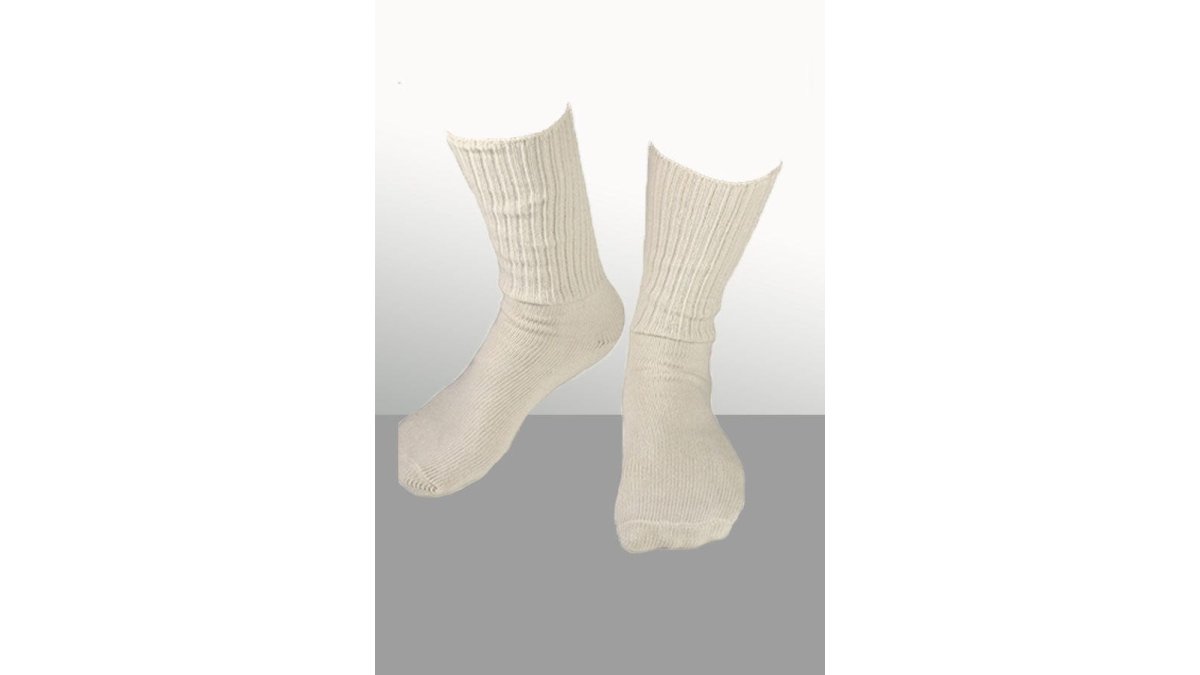
The Allergy Organic Cotton Socks from Natural Clothing Company demonstrate this principle in practice. These socks contain only 0.2% Lycra at the very top, nowhere else in the sock. This minimal elastic content means less synthetic material touching sensitive skin. The generous, loose fit prevents the compression and friction that tight socks create.

How to Wash Clothes for Sensitive Skin
What happens after purchase matters as much as what you buy. Washing and drying methods can either preserve garment gentleness or introduce new irritants.
Use gentle detergents. Standard laundry detergents contain surfactants, dyes, perfumes, and optical brighteners that can irritate sensitive skin. Many people assume their skin reacts to the garment itself when they are actually reacting to detergent residue left in the fabric after washing.
Avoid fabric softeners and dryer sheets. These products coat fabric with chemicals that reduce breathability and can trigger reactions. They also leave residues that build up over time. For sensitive skin, skip them entirely.
Wash in warm water, not hot. Hot water can damage delicate natural fibers and strip away protective oils. Warm water cleans effectively while being gentler on both fabric and skin.
Dry on low heat or line dry. High heat damages fibers and can set stains permanently. Low-temperature drying or air drying extends garment life and maintains the integrity of natural fabrics.
Wash new garments before wearing. Manufacturing processes leave chemical residues on fabric. A gentle wash removes these residues and softens the fabric slightly. This step is especially important for sensitive skin.
Washing frequency also matters. Frequent washing can wear out garments faster and introduce more detergent residue. Spot-clean when possible and wash only when necessary.
Evaluating Garments Before You Buy
Making smart choices starts before purchase. Knowing what to look for prevents buying garments that will trigger reactions or disappoint through poor quality.
Check the fiber content label. Look for 95% or higher natural fiber content. Be skeptical of "natural blends" that include significant synthetic percentages.
Research the dye method. Reputable brands clearly state their dyeing practices.
Examine construction details. Turn the garment inside out. Look for tagless construction, flat seams, and smooth stitching. Feel the seams with your fingers, they should not create raised ridges.
Consider fit and design. Ensure the garment has enough room to allow air circulation without being oversized. Look for designs that reduce friction points, smooth armholes, gently curved seams, and minimal overlapping layers in high-contact areas.
Read customer reviews with sensitive skin in mind. Look for comments from people with skin conditions or sensitivities. Their experiences often reveal issues that others might not notice. If multiple customers mention irritation, that is a strong signal to look elsewhere.
Natural Clothing Company's Organic Cotton Camisole exemplifies what to look for. It is made from 100% Regenerative Organic Certified cotton with GOTS certification. The construction includes no elastic, no spandex, and no adjusters on straps.
Conclusion
Choosing clothing for sensitive skin conditions requires attention to fiber type, dye safety, construction details, and care practices. Natural fibers like organic cotton, silk, and linen provide breathability and eliminate off-gassing. Non-toxic dyes reduce chemical exposure. Thoughtful design, tagless labels, flat seams, loose fits, minimizes mechanical irritation. Proper washing preserves garment quality and prevents detergent residue buildup.
The investment in quality, intentionally made clothing pays dividends through comfort and reduced flare-ups. Natural Clothing Company has built experience helping customers with sensitive skin find garments that respect their bodies. Start with foundational pieces like the Organic Cotton Camisole or Allergy Organic Cotton Socks, both designed specifically with sensitive skin in mind. These pieces demonstrate that comfort and skin health are not luxuries but achievable through informed choices about materials, construction, and care.
Frequently Asked Questions
What fabrics are best for sensitive skin conditions?
Organic cotton and linen are excellent choices for sensitive skin. These natural fibers are breathable, soft, and less likely to trap moisture or heat that can trigger irritation. Organic cotton is particularly beneficial because it's grown without synthetic pesticides and processed without harsh chemicals. Look for fabrics labeled as GOTS certified or Regenerative Organic Certified to ensure they meet strict standards. Avoid synthetic fibers like polyester and nylon, which don't breathe well and can increase friction against your skin.
How do clothing dyes affect sensitive skin?
Many conventional dyes contain heavy metals and synthetic chemicals that can trigger contact dermatitis and itching, especially for people with sensitive skin. Natural, non-toxic dyes, made from plant-based or mineral sources, are gentler and less likely to cause flare-ups. When shopping, look for brands that specifically state they use safe dyes and avoid clothing with strong chemical odors, which often indicate off-gassing from synthetic dyes. Washing new clothes before wearing them can also help remove residual dye chemicals.
Should I buy loose-fitting or tight clothing for sensitive skin?
Loose-fitting clothing is generally better for sensitive skin because it reduces friction and rubbing, which can trigger irritation and itching. Tight garments trap heat and sweat, creating an environment where skin irritation worsens. Look for styles with room to move comfortably, clothes should not pull or bind. Flat seams and tagless designs further reduce friction points. If you prefer a more fitted look, choose garments made from soft, breathable fabrics that still allow air circulation and minimize rubbing against your skin.
How should I wash new clothes before wearing them for sensitive skin?
Wash new clothes in warm water with a gentle, fragrance-free detergent before first wear to remove dyes, finishes, and manufacturing residues. Use the delicate or gentle cycle, avoid fabric softeners and dryer sheets (which can leave irritating residue), and dry on low heat or air-dry when possible. Repeat washing for heavily dyed garments. For ongoing care, continue using mild detergent, wash in warm water, and avoid bleach and harsh chemicals. This routine helps prevent irritation and extends the life of your garments.


Leave a comment