


Table of Contents
- Quick Comparison: Natural Fiber Durability at a Glance
- Benefits of Organic Cotton Clothing for Everyday Durability
- How to Identify High-Quality Natural Fiber Clothing
- Fiber Blends: When a Small Percentage Helps (and When It Hurts)
- How to Care for Natural Fiber Clothes So They Last for Years
- Repair and Mending Basics for Long-Lasting Natural Fiber Clothing
- Climate and End-of-Life: Matching Natural Fibers to Your Region and Disposal
- Conclusion
- Frequently Asked Questions
Last Updated: October 1, 2026
Quick Comparison: Natural Fiber Durability at a Glance
Durable natural fiber clothing guide starts with one honest truth: fiber type alone does not determine how long a garment lasts. Construction, fiber length, and how you wash it matter just as much as the label.
| Fiber | Durability | Best For | Main Weakness |
|---|---|---|---|
| Organic cotton | High with long staple | Everyday wear, sensitive skin | Shrinks if dried hot |
| Linen | Very high, softens with age | Warm climates, breathable layers | Wrinkles easily |
| Hemp | Highest abrasion resistance | Pants, workwear, daily rotation | Stiff until broken in |
| Wool | High, self-cleaning | Cold weather, thermal regulation | Needs careful washing |
| Silk | Moderate | Lightweight layering | Weakens with sun exposure |
Benefits of Organic Cotton Clothing for Everyday Durability
The durability case for organic cotton comes down to fiber integrity, and fiber integrity starts at the field. Organic cotton is grown without the synthetic defoliants and heavy finishing chemistry used in conventional production, and those steps can leave fibers more brittle before the yarn is even spun. When the fiber survives the growing and ginning process intact, it holds together through more wash cycles.

- Short staple (roughly under 1 inch): more fiber ends per yarn, so more ends work loose and pill
- Long staple (roughly 1.1-1.4 inches): fewer exposed ends, smoother yarn, less pilling at friction points
- Extra-long staple (roughly 1.4 inches and up): the smoothest, strongest yarns, used in premium sheeting and fine knits
Practical durability advantages of organic cotton:
- Longer staple fibers mean fewer loose ends and less pilling at underarms, cuffs, and hems
- Reduced harsh finishing leaves fibers less brittle, so they flex instead of snapping
- Breathability moves moisture away from the body, and drier fabric degrades more slowly than damp fabric
- Low-impact and fiber-reactive dye processes tend to bond more thoroughly, so color holds through repeated washing
How to Identify High-Quality Natural Fiber Clothing
High-quality natural fiber clothing passes three quick checks: the certification label, the fabric density, and the seam construction. Most shoppers only look at the fiber content tag and stop there.
Reading Certification Labels: GOTS and OEKO-TEX
GOTS (Global Organic Textile Standard) certifies organic fiber content plus environmental and social criteria across the supply chain. OEKO-TEX Standard 100 tests the finished garment for harmful substances, including many restricted dyes and finishes.
Fabric Construction Checks You Can Do in Seconds
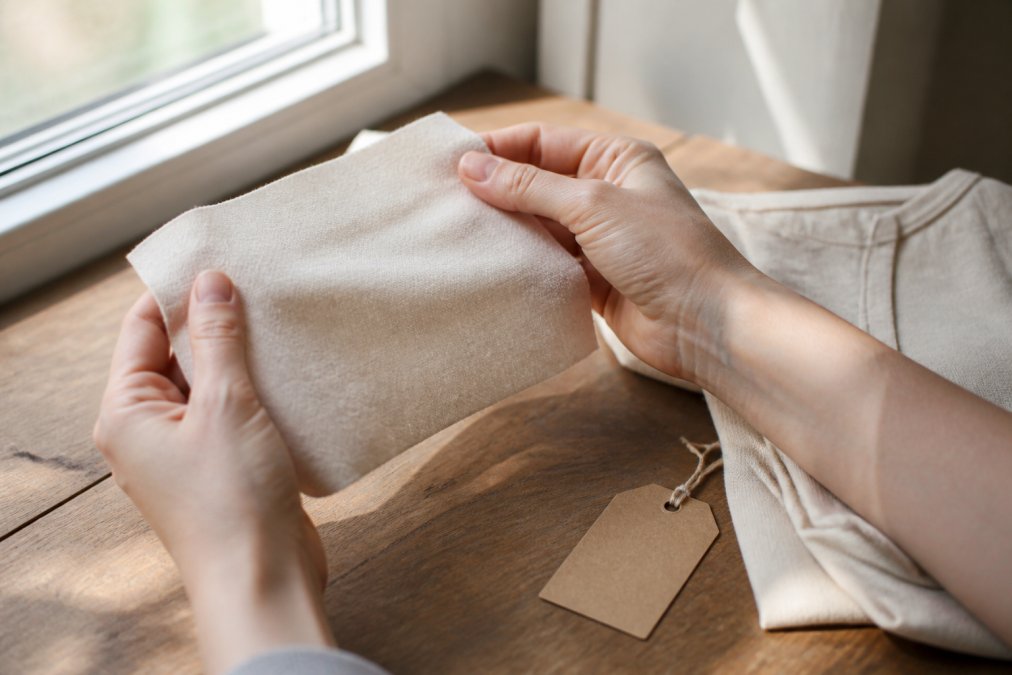
Hold the fabric up to light. If it looks thin and you can see individual yarns spread far apart, it will likely wear through quickly at stress points.
- Stretch the fabric gently across the grain, then release. Good weave snaps back.
- Rub the surface with your thumb. Immediate fuzz means loose fibers that will pill.
- Check seams: flat-felled or reinforced seams outlast simple serged edges.
- Look at buttonholes and stress points for bar-tack stitching.
Fiber Blends: When a Small Percentage Helps (and When It Hurts)
When you are comparing two garments, ask three questions: what is the blend ratio, where is each fiber placed, and does the blend still allow clean repair and end-of-life processing? Those answers predict durability better than the fiber list alone.
How to Care for Natural Fiber Clothes So They Last for Years
How to care for natural fiber clothes comes down to three rules: wash cold, dry low or line dry, and wash less often. Heat is what breaks down natural fibers fastest, both in the washer and the dryer.
A workable routine:
- Wash cold on a gentle cycle with a mild, fragrance-free detergent.
- Skip fabric softener, which coats fibers and reduces breathability.
- Turn garments inside out to protect the outer surface from abrasion.
- Dry on low or line dry. High heat causes shrinkage and fiber brittleness.
- Air garments between wears to reduce wash frequency.
Repair and Mending Basics for Long-Lasting Natural Fiber Clothing
Repair is the most underused durability tool. A small hole caught early takes five minutes to fix. Left alone, it becomes a seam failure that ends the garment's life.
Basic mending kit and skills worth learning:
Women's Organic Cotton Full Briefs →
- Darning: weaves new thread across a hole in knit fabric, ideal for socks and sweaters
- Patch reinforcement: a fabric patch behind a worn area, stitched around the edges
- Seam repair: a simple backstitch to close split seams before they spread
- Button and buttonhole repair: reattaching buttons and tightening loose buttonholes
Climate and End-of-Life: Matching Natural Fibers to Your Region and Disposal
Climate should drive fiber choice as much as style does. The right fiber for a humid summer is not the right fiber for a cold, dry winter.
- Hot and humid: linen and organic cotton, for breathability and moisture-wicking
- Cold and dry: wool, for thermal regulation and warmth without bulk
- Variable seasons: hemp and cotton layers that work across temperature swings
- High sun exposure: avoid silk for outer layers, since UV weakens it
Practical disposal options:
- Textile recycling programs for worn-out garments
- Composting for 100% natural fiber items, cut into strips first
- Donation for anything still wearable
- Repair and repurpose before discarding
Conclusion
Building a wardrobe that lasts takes more effort upfront than grabbing whatever is on sale, and the payoff comes in garments that hold their shape for years. Natural Clothing Company offers organic cotton, hemp, and linen pieces made without toxic dyes, including organic cotton full briefs, hemp blend leggings, and organic cotton wrap pants built for daily rotation.


Frequently Asked Questions
What is the most durable natural fabric?
Hemp and linen consistently rank highest for tensile strength and abrasion resistance among natural cellulose fibers. Hemp's long staple length lets it be spun into strong yarns, and linen shares similar properties. Organic cotton is softer and more breathable but slightly less abrasion-resistant than hemp. Wool adds resilience and resists pilling because of its crimp structure. In practice, the most durable natural fiber clothing combines a strong fiber with a tight weave and quality construction, so fabric density and weave quality matter as much as the fiber itself.
What are the drawbacks of natural fiber clothing?
Natural fibers wrinkle more easily than synthetic blends, can shrink if washed or dried at high heat, and cost more upfront because organic and ethical manufacturing is more expensive than conventional production. Some fibers like hemp feel rougher at first and soften with wear. Natural cellulose fibers also break down over time with heavy abrasion, and protein fibers like wool can attract moths if stored dirty. These trade-offs are usually manageable with proper care and storage, and many people find the breathability and biodegradability worth the extra attention.
Which natural fibers are best for sensitive skin?
Organic cotton and linen are the most commonly recommended fibers for sensitive skin because they are breathable, moisture-wicking, and hypoallergenic. Certified organic cotton avoids residues from conventional growing and processing, and OEKO-TEX or GOTS certified garments are tested for harmful substances. Hemp is also well tolerated once softened. Individual sensitivities vary widely, so try one garment first and pay attention to how your skin responds rather than assuming any single fiber will work for everyone.
How do you identify high-quality natural fiber clothing?
Check the fiber content label first, then look for textile certifications like GOTS or OEKO-TEX. Hold the fabric up to light to assess fiber density and weave quality, and gently tug the seams to see if stitching holds. Look for tight, even stitching, reinforced stress points, and buttons or closures that feel secure. Higher staple length fibers generally produce smoother, stronger yarns with better pilling resistance. A garment that passes these checks is more likely to deliver the garment longevity you want from a durable natural fiber clothing guide purchase.
How does hemp compare to linen for durability?
Hemp and linen are both natural cellulose fibers with excellent tensile strength, and they perform similarly in abrasion tests. Hemp fiber is slightly longer and denser, which can give it an edge in resistance to stretching and UV damage. Linen has a smoother hand and drapes more fluidly, while hemp starts rougher and softens with repeated washing. Both resist pilling well and last for years with gentle care. Your choice often comes down to feel and climate: linen for hot, dry weather and hemp for humid conditions.
Why choose organic cotton over synthetic materials?
Organic cotton is grown without synthetic pesticides and processed without the toxic dyes and finishes common in conventional textiles, which matters for people with chemical sensitivities. It is breathable, moisture-wicking, and biodegradable, so it does not shed microplastics the way synthetic blends do. Synthetic fabrics often rely on PFAS-free or other chemical treatments for performance, and those treatments can off-gas. Organic cotton clothing supports skin health and reduces exposure to substances that some people react to, while still offering good durability when the fabric is well constructed.
How should I care for natural fiber clothes to make them last?
Wash in cold or warm water on a gentle cycle with a mild, non-toxic detergent, and avoid bleach and fabric softeners that break down fibers. Turn garments inside out to reduce surface abrasion, and air dry when possible; if you use a dryer, choose low heat. Store clean, fully dry items folded rather than on hangers for knits, and mend small holes promptly before they spread. Rotating your wardrobe and following each garment's care label will extend the life of natural fiber clothing significantly.
Can natural fiber clothing be composted or recycled at end of life?
Untreated, dye-free natural cellulose fibers like organic cotton, linen, and hemp are biodegradable and can be composted in a home or industrial compost system. Protein fibers like wool also biodegrade but break down more slowly. Garments with synthetic blends, elastic, or plastic trims should not go in compost because the synthetic portion will not break down. For those, look for textile recycling programs or donation options. Choosing simple construction and non-toxic dyes makes end-of-life disposal easier and keeps fibers out of landfills.


Leave a comment