


Last Updated: October 24, 2026
Quick Summary
To wash linen clothes without shrinking them, use cold or lukewarm water on a gentle or delicate cycle with a mild detergent and a low spin speed. Hot water and high-heat drying are the leading causes of shrinkage, so air dry the garment and reshape it while damp.
- Check the care label first, since pure linen and linen blends can need very different care.
- Wash linen every 2-3 wears and keep the load small to medium so fabric has room.
- Hand wash delicate or embellished linen by pressing gently in cool water and never wringing.
- Skip the dryer or use low heat only, removing the garment while it is still damp.
- Treat stains the same day with mild detergent and cool water, and air dry before checking.
Table of Contents
- Read the Care Label Before You Wash Linen Clothes
- How to Machine Wash Linen Clothes Step by Step
- How to Hand Wash Linen Clothes Safely
- Does Linen Shrink When Washed?
- How to Dry Linen Clothes Without Wrinkles or Damage
- How to Treat Stains on Linen Clothes
- Shop Linen You Can Care For With Confidence
- Frequently Asked Questions
Read the Care Label Before You Wash Linen Clothes
Linen is a strong natural fiber, but it still needs gentle handling. The care label is the first thing to check before you wash linen clothes, because it tells you the fiber content, the water temperature, and whether the garment can handle a machine at all.
Natural Clothing Company has worked with linen since 2008, and one lesson holds up: the label knows more than any general rule. A pure linen shirt and a linen-cotton blend can need very different care.
What Linen Blends and Care Labels Tell You
A care label lists fiber content, wash temperature, and drying instructions. Read all three before the garment goes near water.
- 100% linen: Usually machine washable on a gentle cycle in cool water.
- Linen blends: Check the other fiber. Cotton adds softness, while synthetic fibers may change how the fabric dries.
- Structured or lined pieces: These often need hand washing or professional care.
The FTC care labeling rule requires permanent care instructions on most clothing, so the label is a legal record, not a suggestion. Follow it first, then use the steps below.
How to Machine Wash Linen Clothes Step by Step
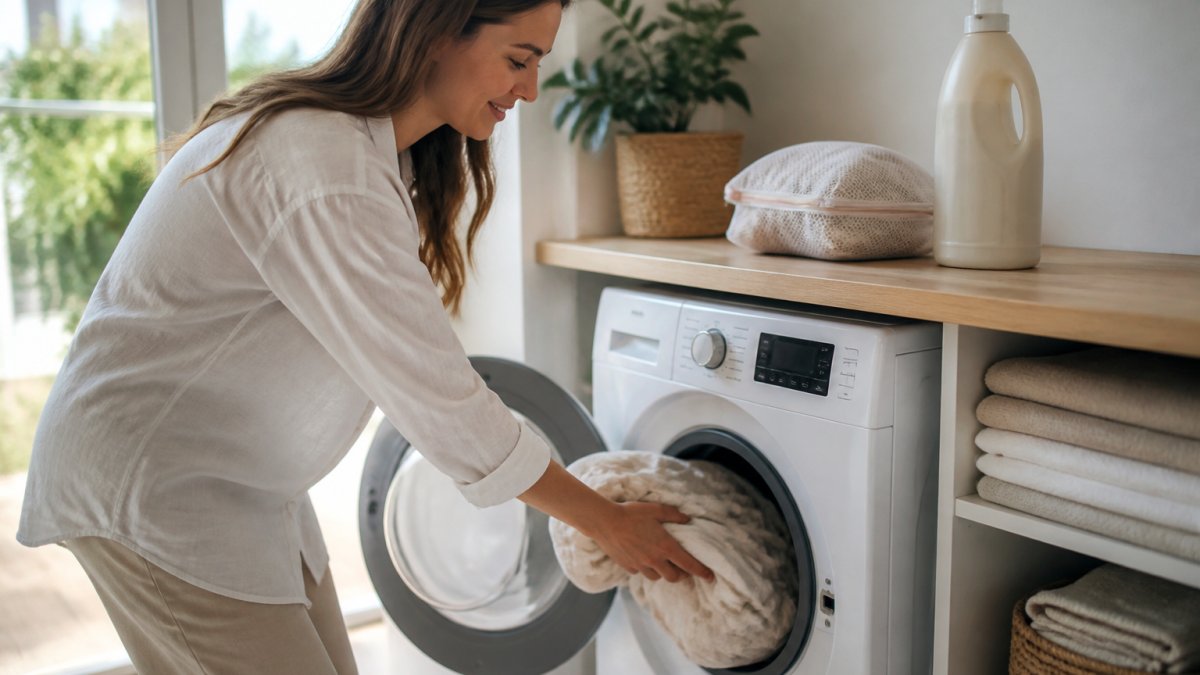
Machine washing is safe for most linen when you keep the cycle short and the water cool. The goal is clean fabric with as little agitation as possible.
- Empty pockets and close buttons. Unbutton the front so the fabric does not strain.
- Turn garments inside out. This protects the outer surface from friction.
- Sort by color. Wash light linen apart from dark linen to avoid dye transfer.
- Use a mesh laundry bag. Small items and delicate pieces stay protected.
- Add a mild detergent. A plant-based, unscented option suits sensitive skin.
- Choose a gentle or delicate cycle. Keep the spin speed low.
- Use cold or lukewarm water. Hot water is the main cause of shrinking.
- Skip bleach and harsh chemicals. They weaken the fiber over time.
For detergent, Eco Clean Laundry Sheets are concentrated, unscented, and simple to measure, which helps when you want a gentle wash without extra additives.

Washer Settings, Load Size, and Water Temperature
Three settings decide whether linen comes out soft or damaged.
| Setting | What to Choose | Why It Matters |
|---|---|---|
| Cycle | Gentle or delicate | Less agitation means less wear |
| Water temperature | Cold or lukewarm | Hot water drives shrinkage |
| Spin speed | Low spin | High spin causes deep creases |
| Load size | Small to medium | Linen needs room to move |
| Wash frequency | Every 2-3 wears | Fewer washes extend fabric life |
A common mistake is stuffing the drum full. Linen needs space, and an overloaded machine rubs fabric against fabric. Wash linen separately from heavy items like jeans and towels, which can crush and twist it.
How to Hand Wash Linen Clothes Safely
Hand washing is the safest route for delicate linen, embellished pieces, and anything the label flags as hand-wash only. It takes about ten minutes of active work.
- Fill a basin with cool water.
- Add a small amount of mild detergent and swirl to mix.
- Submerge the garment and soak for five to ten minutes.
- Gently press the fabric with your hands. Do not scrub or twist.
- Rinse in clean cool water until the suds are gone.
- Press water out against the side of the basin. Never wring.
- Roll the garment in a towel to absorb moisture.
- Reshape while damp and lay flat or hang to dry.
Watch out: twisting or wringing wet linen stretches the fibers and leaves permanent creases. Press, never wring.
Does Linen Shrink When Washed?
Yes, linen can shrink when washed, and the risk is highest on the first wash. The mechanism matters: linen fibers are stretched under tension during manufacturing, and the first time they get wet and agitated, they relax back toward their natural length. Heat and agitation accelerate that relaxation, which is why a hot wash and a high-heat dryer do the most damage.
How Much Shrinkage to Expect
Most linen garments relax a small amount on the first cool wash and then stabilize. The bigger swings come from heat. A common pattern is that a piece washed and dried cool holds its size well, while the same piece washed hot and tumble dried on high can lose noticeable length and width. Treat the first wash as the one that sets the garment's future size.
Eco Clean Laundry Sheets - Concentrated Detergent Unscented →
How to Prevent Shrinkage
- Wash in cold or lukewarm water only. Hot water is the leading cause of shrinkage.
- Keep the spin speed low. High spin adds agitation and drives deep creases.
- Skip the dryer, or use low heat and remove while damp. High heat is the second leading cause.
If a Garment Has Already Shrunk
Slight shrinkage is often recoverable. Dampen the garment evenly with cool water, then gently stretch it back to shape on a flat surface, working from the center outward and matching it against a garment you know fits. Let it dry flat. This works best on small amounts of relaxation; fabric that has been washed hot many times may not fully return, which is why the first wash matters most.
If you are unsure how a new piece will behave, wash it alone the first time on the gentlest setting and air dry it flat. That single cautious wash tells you more about the garment than any general rule.
How to Dry Linen Clothes Without Wrinkles or Damage
Air drying is the kindest method for linen. Hang garments on a padded hanger or lay them flat on a drying rack, away from direct sun.
- Hang to dry: Smooth the garment by hand first, then hang.
- Lay flat: Best for heavy or structured pieces that stretch on a hanger.
- Tumble dry: Use low heat only, and remove while slightly damp.
For wrinkle management, steam is gentler than a hot iron. Lightly mist the fabric and smooth it with your hands, or use a steamer on low. If you iron, do it while the linen is still damp and use a cool setting.
How to Treat Stains on Linen Clothes
Linen is highly absorbent, so a stain that sits for an hour behaves very differently from one that sits overnight. The single most useful habit is to treat the stain before the garment ever enters the wash, because a standard gentle cycle rarely lifts a set-in mark on its own. Always test any product on an inside seam or hem first, and check the care label before you pretreat.
Match the Method to the Stain
Different stains respond to different approaches. Using the wrong one can push the mark deeper into the weave or set it permanently.
- Oil and grease (salad dressing, cooking oil, lotion): Blot off what you can, then work a small amount of mild dish liquid or a drop of gentle detergent directly into the stain with your fingertips. Let it sit five to ten minutes before washing. Avoid hot water, which can bond the oil to the fiber.
- Red wine and berry juice: Blot, never rub. Flush the back of the stain with cool water so the liquid pushes out the way it came in, then apply a small amount of mild detergent. Keep the garment out of direct heat until the mark is gone.
- Sweat and deodorant: These often leave a yellow cast under the arms. Make a paste of mild detergent and cool water, work it in gently, and let it sit about fifteen minutes. Rinse thoroughly, because leftover detergent attracts more soil over time.
What to Avoid on Linen
- Chlorine bleach: It yellows and weakens linen over time. Skip it entirely.
- Hot water on protein or dye-based stains: Heat can set blood, sweat, and wine permanently.
- Rubbing: Friction pushes the stain deeper and roughens the surface of the fabric.
- The dryer before the stain is gone: Dryer heat locks a stain in. Air dry first and check the garment in good light.
Once the stain is treated, wash the garment as usual on a gentle cycle with cool water, then air dry and inspect before it goes anywhere near heat. For table linens, keep a small pretreatment kit on hand so a spill at dinner does not become a permanent mark on your embroidered linen napkins.
Shop Linen You Can Care For With Confidence
Linen lasts for years when it is washed gently and dried with care. The fiber gets softer with every wash, so good habits pay off over time.
Natural Clothing Company makes linen pieces with this in mind. A few options worth knowing:
- Easy Crop Linen Pants for breathable everyday wear.
- Linen Collared Button Shirt for a versatile layer.
- Linen Shirt w/Collar and Pocket for a versatile layer.
Each piece is made from natural fibers and free from toxic dyes, so you can build a wardrobe that feels good against your skin. Sensitivities vary from person to person, so patch test new pieces if your skin is reactive.


Frequently Asked Questions
Can you machine wash 100% linen clothes?
Yes. Most 100% linen garments can go in the washing machine on a gentle or delicate cycle with cold or lukewarm water and a mild detergent. Use a short cycle, keep the spin speed low, and wash linen separately from heavy items like jeans or towels. Check the care label first, since some linen is labeled hand wash or dry clean only. Skip bleach and harsh chemicals, and never wring or twist the fabric when you move it from the washer.
Will 100% linen shrink when washed?
Linen can shrink when washed, especially on the first wash and especially in hot water or a hot dryer. Most shrinkage happens because of heat and agitation, not water alone. Wash in cold or lukewarm water, use a gentle cycle, and air-dry or tumble dry on low heat to limit it. Some natural shrinkage is normal for linen fabric, so expect a small change in shape and size even with careful washing.
What water temperature should you use to wash linen clothes?
Cold or lukewarm water is the safest choice for linen clothes. Hot water can cause shrinkage, fade colors, and weaken the fibers over time. If the care label allows warm water, keep it on the cooler end and use a mild detergent. Cold water also protects the shape and size of the garment and is gentler on non-toxic dyes, which helps your linen keep its color through repeated washes.
Can you put linen clothes in the dryer?
You can, but air-drying is better for linen. If you use a dryer, choose the lowest heat setting and remove the garment while it is still slightly damp, then hang it to finish drying. High dryer settings cause shrinkage, wrinkles, and fabric damage. Shake the piece out and reshape it before hanging. For a crisp finish, iron it while still damp or use a steamer to relax wrinkles without over-ironing.
Washing linen properly comes down to three habits: cool water, a gentle cycle, and patient drying. Natural Clothing Company offers linen and organic cotton pieces made for people who care about what touches their skin, with natural fibers, no toxic dyes, and a small-business approach that has held steady since 2008. Get started with Natural Clothing Company and build a wardrobe you can wash and wear with confidence.


Leave a comment